


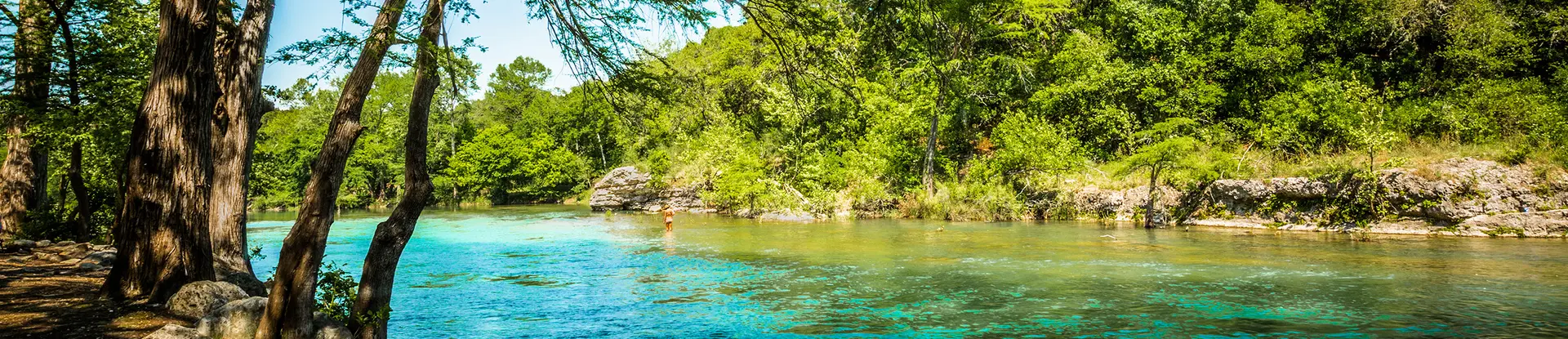
The water warriors are on the job! SwRI’s hydrology group monitors natural resources to guide water system management and conservation decisions. They study groundwater and surface water chemistry, qualities and interactions to understand environmental impacts and protect waterways and resources. SwRI hydrology research keeps the data flowing to stakeholders like municipal water systems, river authorities, commercial clients and more, which in turn safeguards the water flowing to our homes.
Listen now as hydrologist Mauricio Flores discusses current Pecos River and transboundary waterway research, the human impact on water resources and the urgency to plan for AI data center water usage in Texas.
Visit Water Resource Services to learn more about SwRI’s water management and analysis capabilities.
Transcript
Below is a transcript of the episode, modified for clarity.
Lisa Peña: Watching our water systems. The SwRI Hydrology team dives into surface and groundwater research to analyze, protect, and guide management of finite valuable water sources. It's an especially important issue this time of year when summer heat increases evaporation and water demand. An SwRI hydrologist joins us for a refreshing hydration conversation next on this episode of Technology Today.
[MUSIC PLAYING]
We live with technology, science, engineering, and the results of innovative research every day. Now, let's understand it better. You're listening to the Technology Today Podcast presented by Southwest Research Institute. From deep sea to deep space, we develop solutions to benefit humankind. Transcript and photos for this episode and all episodes are available at podcast.swri.org. Share the podcast and hit that subscribe button on your favorite podcast platform.
Hello, and welcome to Technology Today. I'm Lisa Peña. You can call them water warriors, but they are also known as the SwRI hydrology group. They use technology and research to characterize water resources and better understand the water cycle. Their work informs proper waterway management, conservation, resource planning, human health regulations, and more. Our guest today is SwRI Research Scientist and Hydrologist, Mauricio Flores. Thank you for being here, Mauricio.
Image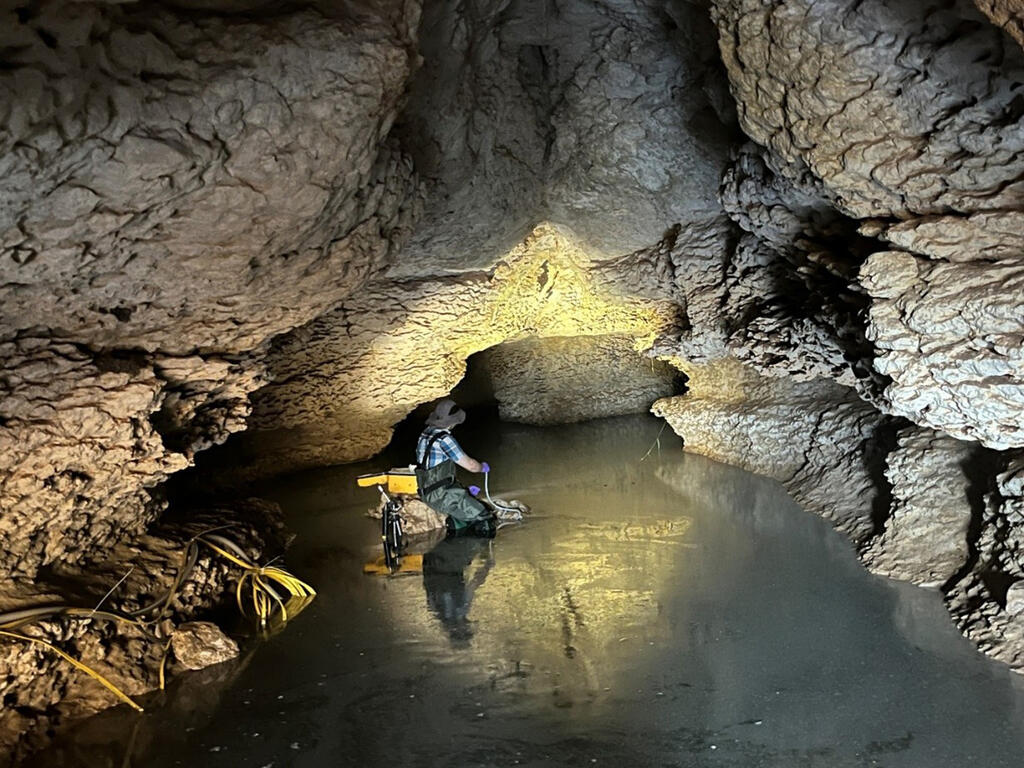
Dr. Andrew Gluesenkamp
SwRI Research Scientist and Hydrologist Mauricio Flores samples water at the Phantom Lake Spring cave in west Texas, a vital part of the San Solomon Springs ecosystem. Sampling waterways reveals chemistry data that guides management and conservation decisions.
Mauricio Flores (MF): Thank you for having me.
LP: All right. So we last discussed SwRI water research on the podcast in 2019. That was Episode 9. And there have been new developments in water studies and findings since then, so we're glad you're here for this update. So I want to start with an overview of SwRI's water resource services or hydrology group. What type of research are you conducting? What do you do?
MF: So the SwRI hydrology group primarily focuses on characterizing water resources in dry environments, such as those we see in West Texas, Central Texas, Northern Mexico. We use different tools such as water chemistry, monitoring groundwater levels, and development of numerical groundwater flow models to better understand these water resources and to help inform communities and different regulatory authorities on the best ways for managing those water resources.
LP: OK, so tell us a little bit about groundwater, water found underground in soil, sand, and rock versus surface water, water above ground like rivers, lakes, and streams. What are some key differences in maybe water quality, and why do these differences matter in your research?
MF: The key differences between surface water and groundwater are in how we see them or how we experience them as people. So surface water is very visible. We can see it in the rivers and the lakes, et cetera. So when there's a surface water problem, like, oh, our lakes are drying up, then that's a very quick way to know, oh, we should sound off the alarms.
Whereas groundwater, because it's hidden, it's underground. It's kind of something that people can tend to lose track of. It's something that is a lot harder to measure and a lot harder to characterize, because you can't see it. You can't easily measure the flow of water at a certain river — like you could at a certain river segment, for example. You won't necessarily be able to very easily, quickly just go to the river and take a water sample.
With groundwater, it's a lot more complicated. You have given wells that penetrate the aquifers, the different underground units of water that provide water for communities. And that's kind of an imperfect picture of the water system as a whole. As far as water quality goes, surface water is usually more vulnerable to, for example, microbiological contamination. So pathogens like E. coli, for example, fecal pollution in general.
Whereas groundwater, usually when there's especially if we're talking about sandstone aquifers or alluvial aquifers or aquifers that have where the water is present in the ground for longer periods of time, oftentimes the considerations go more into, OK, what is the salinity of the water? What are the minerals in that water? And what are the different chemicals that over time, because of the interaction with the Earth, impact the water chemistry, and therefore the water quality?
LP: How do these different water sources interact?
MF: Surface water and groundwater are intricately linked because basically, oftentimes during periods of drought, the groundwater is the main input that keeps a river alive, so to speak. So that's especially true in many areas of Texas and other parts of the world, but especially in Texas, we see it.
For example, you might have some rivers where they're completely dependent on groundwater, where their base flow or the flow that is being contributed by the groundwater is basically the majority of the flow for that river. So if you have a severe drought where not only the surface water resources such as rivers are drying up, but there's also excessive pumping or just a very severe drought, then that means that the groundwater might be contributing less to the river, and that means that there's just less river going all around.
And in general, sometimes there's this whole dance between surface water and groundwater where along a river stretch, you'll have areas where the river is giving more water to the aquifer rather than the opposite, and other instances where the aquifer is contributing more water to the river. And so that gain and loss of flow in the river is an example of how these resources are linked.
LP: So what are some reasons government agencies, groundwater districts, or commercial clients might seek out the SwRI hydrology group water services?
Image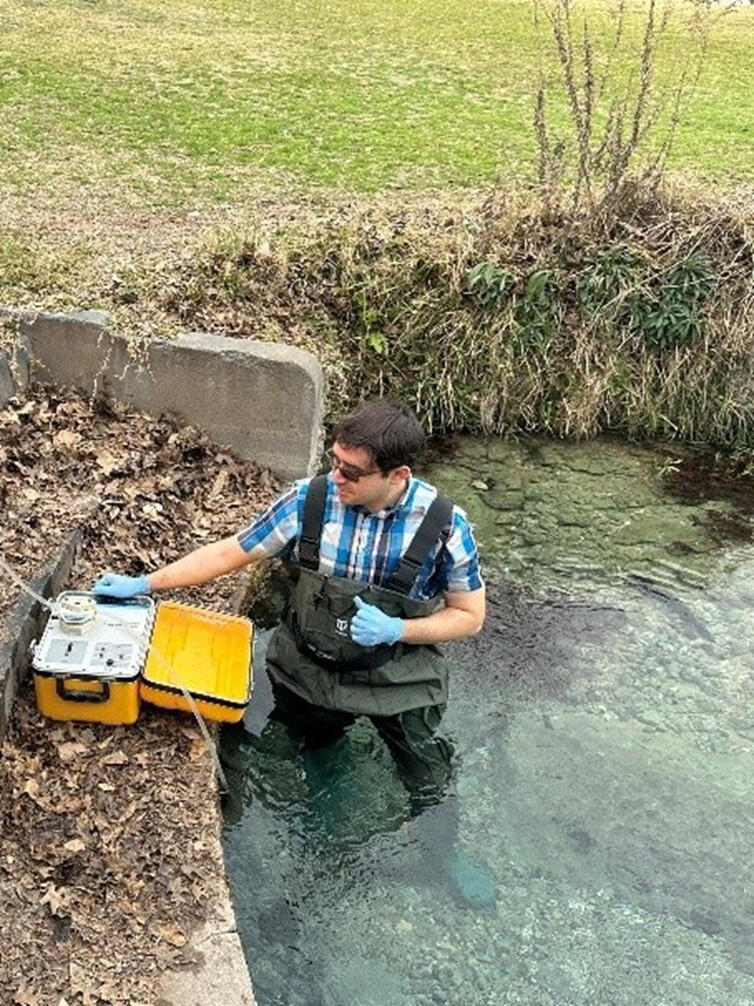
Dr. Andrew Gluesenkamp
Flores samples water at South San Felipe Springs, Del Rio, Texas.
MF: Yes. So sometimes these agencies, and they can vary from groundwater conservation districts to state regulatory agencies to sometimes community groups, and in some cases, as well as federal agencies. Sometimes they have a question about, OK, we are concerned about this specific spring, for example, this specific water resource that our local community depends on for the economy, whether it be tourism economy or just as a drinking water source.
They'll have a concern. Hey, we're concerned that this water resource is very vulnerable to future droughts. Or they might say, over the past several years, this water resource has gone dry during the summer, and so we're concerned. What can we do to better understand, better protect this water resource?
You know, some water resources might be very, very old resources where it's like, it rained thousands of years ago, and that water that you see coming out of the ground right now is from that recharge that happened a long, long time ago. In other cases, it's a very active, new system, young system where it rained a couple of days ago, and now the water you see coming out of the spring or at this well is a result of that recharge that happened very recently.
And so we look at, for example, the chemistry to give us some clues about what the history of that water is. And how does that water that you measure, that you collect at this point, at this spring or at this well or at this river, compare to the chemistry of the waters in other areas?
That helps different communities and regulatory agencies get an idea of, OK, maybe we should do maybe we should focus on protecting this area specifically. Maybe that looks like we're going to develop a specific drought index or drought contingency plan to protect this resource.
LP: OK, so let's get into some of your current research. You are studying the flow and geochemistry of the Pecos River, which starts in Mora County, New Mexico, and crosses into West Texas, reaching the Rio Grande. So why is the team currently focused on this particular river?
MF: We're focusing on two main segments of the lower Pecos River. We're focusing on the Forgotten Reach, which is the northern segment from Imperial, Texas, down to Sheffield, Texas. And then there's the Lower Canyonlands of the Pecos River, which is from Sheffield down to the confluence where the river meets the Rio Grande.
And so we are looking at this river specifically because there's a convergence of a whole bunch of different water issues happening within this watershed. So for example, West Texas has a lot of oil and gas activity, and so there's always concerns about, oh, what are the impacts of the oil and gas industry into this, whether it's from a water quality perspective to just a water use perspective?
For example, there's an increased attention being given to produced water, which is just water that is a byproduct of the oil and gas, the fracking processes. So they need water to frack. And so that water that they bring up when they're fracking, et cetera, that is produced water.
And then there's a lot of attention being given to, what do we do with all this produced water? How do we dispose of it? Can we reuse it for something else? If we want to reuse it for something else, what kind of treatment does it have to get?
And so there's a lot talk about a lot of companies and agencies doing, oh, we're going to produce water. We're going to convert it to polished. We're going to treat it so thoroughly, it's going to be — they call it polished water. So basically, very high-quality water. It's supposed to be even better than drinking water quality.
And they're thinking, well, what we could do with, in the case of the Pecos, because of reduced flows in the Pecos, we could introduce this treated, produced water into the Pecos River channel. And then now there's going to be more flow, and people will have more access to water. There could be potential habitat restoration, and all that.
And so there's all these kinds of ideas going around of, OK, here's an impact from the oil and gas industry. There's all this produced water. What can we do with it? And here are some potential beneficial reuses of that water.
The Pecos River has always been known as a very particularly salty river. It's not necessarily useful for a lot of agriculture. It's not useful for drinking, because it's too salty. And further downstream, there's concerns about, OK, we have the International Amistad Reservoir, which is in the Del Rio area in Val Verde County. The Pecos River is one of the main sources that feeds into that reservoir.
And so if the Pecos River has a salinity issue, then down the road the Amistad Reservoir, or the Rio Grande, could have salinity issues as well. And then that could propagate downstream over time, all the way to the Gulf of Mexico. So basically, looking at the oil and gas impacts, looking at the salinity, et cetera, those are some key issues there.
In addition to that, there is also a lot of interest in basically other uses of water in that area. There's a lot of data centers that are West Texas is kind of in the crosshairs of a lot of companies that would like to develop data centers in that area. And so there's a lot of concerns about, OK, those data centers need electricity. Those data centers will need water, et cetera. So how does that impact it?
So basically, the Pecos River is just this — it's a very emblematic watershed of a whole bunch of different water issues that are all happening in one watershed. So that's the background of why we thought this is a very important river to study and to better understand from a perspective of water quality and quantity.
LP: All right. Another big project for the team right now, understanding the geochemistry and water quality of spring systems and transboundary water resources. So explain what you're studying here.
Image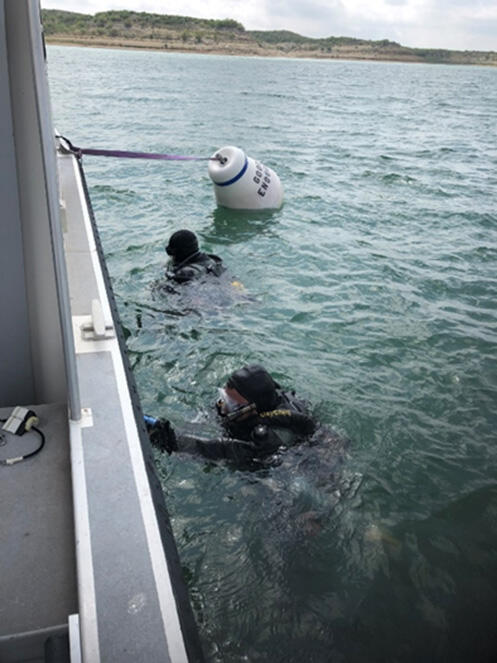
Dr. Ronald Green
SCUBA divers prepare to explore Goodenough Spring in the Amistad International Reservoir, along the U.S.-Mexico border, northwest of Del Rio, Texas.
MF: We look a lot at springs, because springs are basically a surface expression of the groundwater system. So it's basically groundwater that's come up to the surface, and you have a spring. And so springs are very important for multiple scientific and also just economic reasons.
So for example, from an economic standpoint, in a lot of areas in Texas, because Texas is very hot, very dry overall, a lot of communities, especially small communities, will depend on their spring system as kind of a source of tourism money, as well as just a source of recreation. And so for example, locally we have the famous Comal Springs. There used to be the San Antonio Springs. There's Barton Springs up in the Austin area. And then in other areas in far West Texas, for example, there's San Solomon Springs.
And so all of these springs, despite their differences, they're all expressions of the groundwater system. So it's basically a little snapshot, a natural snapshot of the aquifers that feed that spring at a point where we can actually see it. We can't usually see groundwater, so then that kind of impacts a lot of the limitations we have with understanding groundwater systems.
Unlike surface water, which we can see and measure very directly, with groundwater we kind of have to do a lot of artistic stuff as well as scientific methods to understand that system. And so springs are basically like a proxy or a way to understand the groundwater system without necessarily having to drill a new well or have to go to a well and consider, OK, is this well OK for sampling? Is it appropriate for getting an accurate sample, et cetera? It's a natural system, and we can just it's a natural feature that can give us insight into the system that we can't otherwise see. And so that's the scientific aspect of it.
And from the economic standpoint, as I mentioned, it is the source of recreation and tourism money for a lot of communities. And so in a lot of communities, these springs are prone to going dry. So for example, we have in West Texas, there used to be Comanche Springs. It's still generally flowing, but Comanche Springs used to be a very big part of the Fort Stockton economy and a very important centerpiece of that community. But over time, because of different changes in land use and increased drought, Comanche Spring has basically been reduced to a shadow of its former self.
And so that's kind of happening that's a risk that is happening across the state. There's lots of other examples. For example, Las Moras Spring, which is a current spring that we're looking at located in Kinney County, that is a spring that, prior to six years ago, it was pretty much a perennial spring. It was flowing throughout the year. Except for during very, very extreme droughts, it would pretty much be a very healthy spring. Just consistent flow, generally always having a visible expression and a centerpiece of that community's economy.
And a key point that a lot of community members that live there would look back and think, oh, yes. Growing up, I spent a lot of time with my family at Las Moras Springs, at Fort Clark Springs, et cetera.
But recently, that spring has gone dry every summer for the past five, six years. And so there's a lot of attention being given to, oh, what's happening? Why is this spring going dry? What are the causes of this? Is it too much pumping? Is it too much pumping here, but not necessarily over here? Is it because there's too many trees and they're sucking up the water? Et cetera. And so there's a lot of discussion about, what do we need to do to make sure that this spring is still flowing for generations to come?
And so looking at when we're studying those springs, we're kind of thinking, OK, well, let's study the geochemistry, let's look at the historical data, and let's look at the chemistry of the spring versus wells versus other sites in the area to understand how that local system works so that we can hopefully constrain what the source areas for that spring is so that down the road, eventually we could say, OK, maybe pumping in this area or in this area is more likely to have an impact on the spring flow if it increases a lot. Or maybe x percent of the flow is really because of a lack of drought, lack of rainfall, for example. So kind of constraining, how much is each component contributing to that spring going dry?
And from the transboundary perspective, it's very much a similar concern. So in the International Amistad Reservoir region, for example, so the Amistad dam was constructed in 1969 on the Rio Grande. And so prior to its construction, there used to be a spring there called Goodenough Spring. And prior to the construction of the dam, it was the third largest spring in Texas.
And after the construction of the dam, it ended up getting submerged under 100 to 150 feet of lake water, of the reservoir's water. And so the spring is still there, but it's now under all this surface. And so one of the questions about that spring is, what is its source area? Because it's a very important input to the reservoir, to the Rio Grande in general in that area. And what is the source area of that spring?
And historically, there was a lot of anecdotal evidence suggesting, well, this spring is located in the United States, but it seems to respond to rain events that occur only in Mexico, for example. And so then that kind brings into the question of, OK, in the Treaty of 1944, the Water Treaty of 1944 between the US and Mexico, different rivers, different springs were allocated to the different countries.
So, for example, if you look at the Treaty of 1944, it'll say the Pecos River and the Devil's River are the responsibility of the United States. The Conchos is Mexico, et cetera. And in that case, they'll say, Goodenough Spring allocated to the United States.
But if you have a spring that is located in the United States but its source area is partly or entirely in Mexico, then that brings in a whole bunch of other kind of jurisdictional questions, management issues that we so much as scientists aren't involved in making the decisions for. But the data that we collect could help those binational entities decide, OK, we need to approach this this way going forward.
LP: So what type of techniques and technology are you using to analyze water sources, whether it be above ground, underground, spring, aquifer?
Image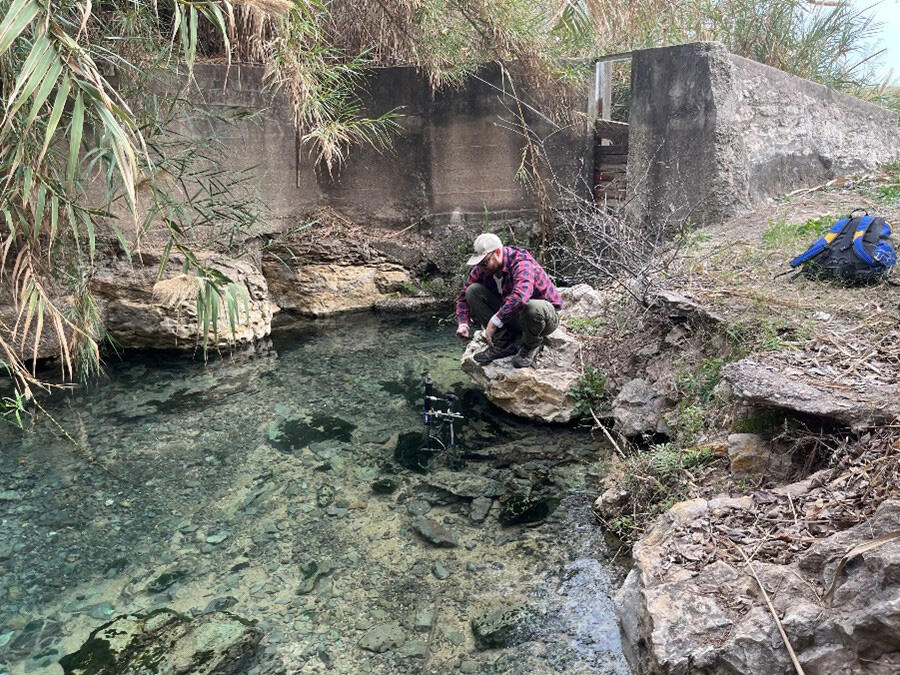
Dr. Andrew Gluesenkamp
SwRI Research Scientist Dr. Dylan Parmenter monitors a spring feeding the Rio Grande River near Acuña, Mexico.
MF: Yes. So when it comes to water quality, we typically just use a water quality a multi-parameter sonde. So basically, it's just this instrument. It can be handheld. It's a portable instrument. You go to a given river site, or you go to sample a specific well or spring, and it measures the pH, the dissolved oxygen, the temperature, the specific conductivity of the water. And so that gives us an idea of the general chemistry of that water that we're collecting.
And we use that tool, that technology, that sonde to basically monitor, OK, we want to collect this water sample from this site. We want to make sure that it is a representative sample. We want to make sure that if we're sampling a well that we're not getting all the stagnant water that was just collecting at the well.
We want to get a sample that is representative of the aquifer system so that we can say, yes, this water sample, the chemistry that we see in this water sample is basically Edwards Aquifer water, or it's Carrizo-Wilcox Aquifer water, et cetera. And so we use that sonde to help us make decisions of not just collect the data, but also make decisions of, OK, the different parameters, the values of the temperature and the conductivity, et cetera, and pH have stabilized, so that means that we're probably getting a representative sample of that aquifer.
And other tools that we use in water sampling are, for example, peristaltic pumps, which are just these little portable pumps that we run some tubing through, and then we just run it, we run the groundwater through that tubing to help control the flow into the sample bottles. And so that just helps control the quantity we get and makes sure that the flow that we're collecting it at is at a steady flow so that we're not introducing any other contamination or other effects into the sample that we're collecting.
And beyond that, we also use, for example, different flow measurement tools, such as flow trackers, et cetera, to measure the flow at different segments of different rivers. So as part of that Pecos River study, for example, we're collecting water chemistry samples, but we're also looking at, what is the flow at this point of the river, at this point of the river, at this point of the river so we can see what flow changes along the river, so we can better understand the surface water-groundwater connection.
And then as far as other tools, we also use a lot of existing available data that is provided by other agencies such as NASA, the United States Geological Survey, et cetera. And so we use those data to basically, we take those data, and we also take our field-collected data and synthesize it all together to see what kind of picture we have for whatever water resources we are studying.
LP: What is remote sensing, and how are you using it?
MF: So remote sensing is basically measuring the properties of Earth from afar. So that can look at that can include, for example, near-Earth remote sensing. So that can look at, for example, drone imagery. You take a drone, you fly over it, you take photos or you take infrared measurements, et cetera, to get an idea of, what is the heat distribution in this area? Et cetera. There's also LiDAR, for example. LiDAR, just measuring the topography and looking at vegetation, et cetera.
And then what we mostly focus on is satellite-based remote sensing. So my colleague, Dr. Dimitrios Stampoulis, does a lot of the remote sensing work in our group. And so he looks at different data sets, for example, especially from NASA, such as GRACE, which gives us information about the groundwater storage. There's ECOSTRESS, which gives us clues about evapotranspiration. There's different satellite missions that have focused on soil moisture or that have soil moisture as a component that they can give insight into.
And there's a whole bunch of other satellite missions and satellite data products that give us clues or information about vegetation cover, land use change, groundwater storage, evapotranspiration, precipitation, et cetera. You have a satellite in space looking at the Earth from afar, hence why it's remote sensing, so we can cover bigger areas and have kind of a greater regional context for those water resources to fill in the gaps there.
LP: OK, let's talk about the current drought status in our state, Texas. We've had what feels like a lot of rain lately, but has there been an impact on drought conditions?
Image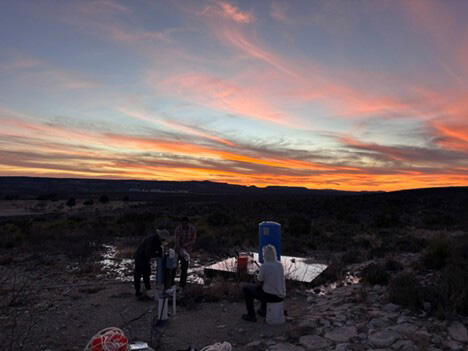
Christy Muse
The SwRI hydrology group and collaborators prepare to sample a well in west Texas.
MF: Yes. So, in general, most of the state is still in some level of drought. So when we look at the drought monitor pages online from the entities that monitor drought, most of Texas is still in moderate or severe drought. In our area in Bexar County, we're kind of in a mix of moderate and severe drought.
And so currently, despite all this rain, we're not quite out of the woods yet. It's definitely a good reprieve. It contributes to getting us out of the drought phase. But in order for us to get out of the drought phase — so for example, the Edwards Aquifer authority references their J-17 index well a lot for deciding what drought restrictions they impose.
Currently, despite all this rain that we see, despite a very recharge-heavy April, for example, the water levels are still below the trigger that requires drought restrictions. And so really, what we would need to get out of a drought in this case is multiple, continued, sustained rain events continuing just for longer periods of time and more consistent.
Usually I think this current drought, for example, we've been in the drought phase for basically five to six years, and so it takes a lot of rain to bring that back up to where we're no longer in a drought. But unfortunately, just one month of consistent rain doesn't really fix a six-year problem, basically.
LP: One or two months, not enough to fix that, as you said, a six-year problem. But what impact do the summer months have on our water resources? Is it different in the summer with the summer heat?
MF: Yeah. So summer temperatures can cause an increase in, for example, evaporation, evapotranspiration. The biggest impact, I would say, is just that there's a lot of water demand throughout different uses. So for example, people like their air conditioning. People like to keep their lawns green. They like to keep their garden going, et cetera, as much as possible. And all that necessitates water use.
And of course, in the summer months that can be a little extra challenging, especially if we're talking about maybe crops that are not maybe things that are not as tolerant for dry conditions. And so summers, usually it means higher evaporation. In some cases, it can mean less rainfall. Other times, we'll get thunderstorms, and all that.
But again, as I mentioned, single thunderstorms or scattered thunderstorms aren't enough to bring the aquifers or groundwater resources back up to speed or replenished. And so generally, the summer is a little different, both in terms of the heat causes increased evaporation, but also, the profile of our water use also changes, and that presents different challenges versus the winter or the spring.
LP: So this time of year, more challenges and a great time to think of those conservation actions that help. All right. So I wanted to get your take on this before we go. So a topic we're hearing a lot about right now is AI data centers using millions of gallons of water daily for cooling. Are you seeing a current impact, or are you concerned about an impact on our water resources in the near future?
MF: The AI data centers are not mentioned explicitly as a thing to consider as having an impact on water resources in the state water plan. So every five years or so, the Texas Water Development Board and the state agencies prepare a state water plan, basically looking at, this is the status of our water availability in the state, whether it's looking at surface water, groundwater, everything.
This is the status of the state right now. And based on these kinds of population projections or needs, et cetera, we're going to need this much water in the future, for example. And so it's basically a plan to help guide, OK, what kind of management decisions should be made across the state of Texas by different communities to make sure that we have enough water for the amount of people that are here and going to be here as people come to Texas?
And one of the concerns with the recent state water plan is that the draft does not mention AI data centers at all. And so a lot of community members and other entities are very concerned. It's like, well, these data centers require a lot of electricity. The conversation started as looking at the energy component of, OK, how do we get all this electricity out here? Especially if you want to build a data center in this population-sparse region, you need to get electricity over there. How do we do that?
And then by association, water came into the conversation, because the water energy meeting point is very crucial in general. And so then people started thinking of, oh, OK, if you need x million gallons of water to build the data center and get the data center started, then what impact is that going to have on local and regional water resources?
And then there's also the concern about, well, what about keeping it running, keeping the data centers ongoing? And some of these data centers, they're supposed to have, for example, closed loop systems where they just kind of recycle the water or most of the water that they already take, so that it's not necessarily, oh, you're consistently taking 30 million gallons every single day from this aquifer or whatever.
But there's other configurations that maybe are not as efficient or as considerate of conservation. And so a lot of people are concerned about, well, if it's not even in the state water plan, then how does that then that basically puts Texas communities in a very vulnerable position for potential impacts for a big boom in data centers being built across the state in the future.
So if you don't have that accounted for in the water plan and you don't have guidance on how to address that, then that kind of makes it harder for small towns or really any town, but entities that have maybe limited resources to address, OK, we need to consider this about this specific data center. Or, oh, this data center may have this impact, so we should do this. Or this data center may not have a lot of impact, so we should do this.
LP: So impacts are to be determined at this point.
Image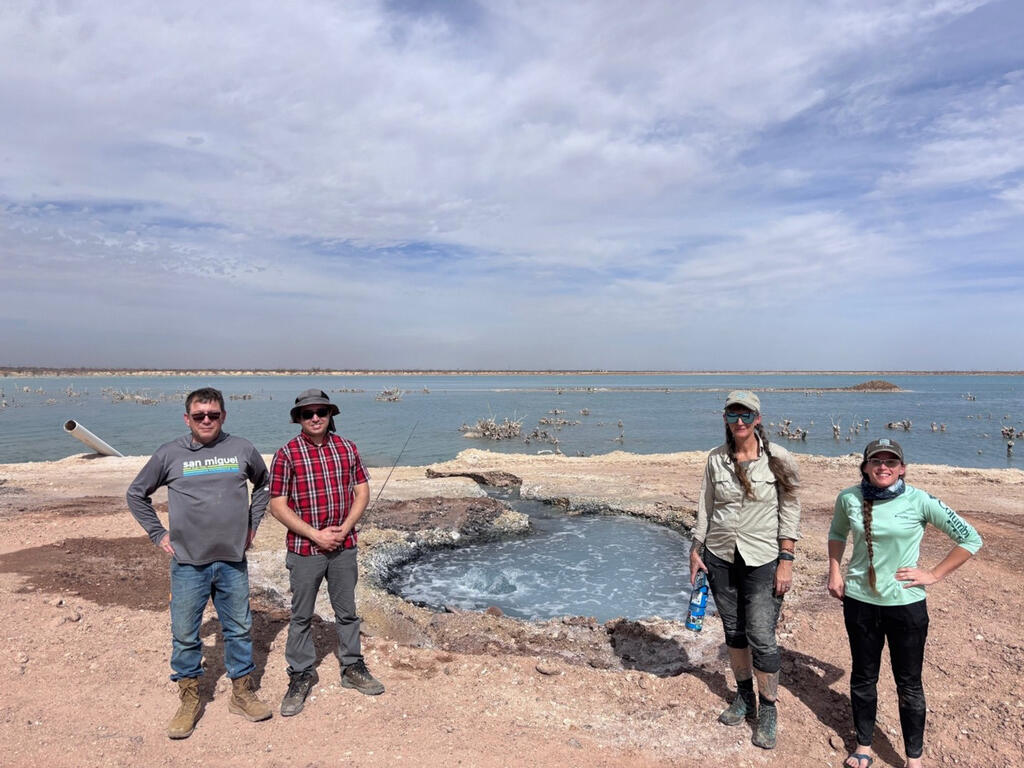
Christy Muse
SwRI hydrologists and collaborators conduct research at Boehmer Lake in west Texas.
MF: Yeah, it depends. It's very case-by-case. But the key point is that it needs to be actually considered in the equation when you're planning and all that. And in the case of the state water plan, a lot of the reasons behind it not being included is just that this data center, AI data center issue has kind of been a relatively recent thing.
So as I mentioned, this process of developing the water plan takes several years. And when they started the process, the data centers weren't necessarily a big issue, so it wasn't under consideration this time. And so now we're in this case where, OK, it might not even be in a state water plan until five years from now, and then that causes a delay in our understanding of how to best manage that.
LP: OK. So again, still full impacts are not determined yet, but something to watch for.
MF: Yes.
LP: OK. So as we discuss water usage and conservation, what are your top concerns and conservation advice?
MF: So my top concerns, I would say the component that underlies everything is actually not scientific or even environmental in the sense. It's very much like social and political and economic. So these water resources, the different watersheds, the different aquifers, they do not stop at jurisdictional or political boundaries.
And so when you're approached when you're studying different water resources or seeking to protect them, you're dealing with a wide swath of stakeholders. So there's stakeholders in agriculture, in oil and gas industry, and just everyday people using it for drinking water. There's stakeholders across different political lines, such as for example, in the Rio Grande Basin, there's Mexico. There's the United States. There's Indigenous nations. Even domestically with the Pecos River, there is the New Mexico and Texas, always go back and forth about how to manage the water resource the Pecos River even just between different states.
And so a big component is just making sure that you have a big concern of mine is always making sure that you have a very thorough representation of the different stakeholders that are using the water resources to help make those decisions. Because you can have all the data, you can have all these models, et cetera. But if the stakeholders aren't having input or they're not part of the process or aware of these tools that exist, then it doesn't really mean anything in the end.
And if these stakeholders aren't talking to each other or they're not willing to work with each other, then that presents other issues. Because again, this aquifer, the Edwards-Trinity Aquifer, there's a piece of it in Mexico. There's a piece of it in the United States. It doesn't care about the border, per se, the way that us human communities do, for example.
Even here locally, the Edwards Aquifer recharge zone, a lot of it that contributes to the San Antonio portion are in counties west of us. So then having a good relationship with those counties and communication with those counties is very important. And so that's probably the biggest underlying concern or component that I'd say is the most important, just making sure that all stakeholders because pretty much everybody uses water in some way or another. Water is ubiquitous in terms of its importance. Making sure that there's comprehensive dialogue going on about these water resources so that you can actually sustainably manage them in the long run.
And it's more complicated. The more people you have in the mix, it's more complicated, more things you have to consider and all that. But in the long run, it can be more effective so that you're not going back to realizing, oh, we made this mistake because we didn't consider x, y, z, so now we have to go backtrack, or whatever.
LP: So when you understand the big picture, it makes it easier to protect these water resources. And conservation kind of flows naturally out of understanding everyone who's using it and how it's being used.
MF: Yes. It's a key part of the developing solutions for water resources.
LP: OK. And finally, the Texas Groundwater Summit for groundwater professionals, experts, and stakeholders is held annually here in our hometown, San Antonio. This year, it will be held September 1 through 3rd. It's an opportunity to explore emerging trends, share research, and discuss pressing groundwater issues facing Texas. So why is this a valuable gathering for your team?
MF: So this event is an opportunity to basically meet with a wide range of stakeholders. So it's chiefly groundwater conservation districts that are charged with managing the groundwater resources across the state. Also, different river authorities will often attend. And also, from my perspective, it's also very useful because it keeps us up to date on the type of science that other people are using and other techniques that might be useful for characterizing the water resources that we focus on.
And it's also a very good opportunity to keep a finger on the pulse of what is going on politically or legislatively. This is a good opportunity for a lot of us to get an understanding of, what's going on in the water world beyond just our scientific bubble, so to speak.
LP: All right. So most of us just turn on our taps, expect it to flow, but there really is so much going on behind the scenes to protect our water resources. So thank you for being here and for telling us about SwRI's hydrology research, Mauricio. The water resource services team is certainly busy understanding and protecting our waterways.
MF: Thank you for having me.
And thank you to our listeners for learning along with us today. You can hear all of our Technology Today episodes, and see photos, and complete transcripts at podcast.swri.org. Remember to share our podcast and subscribe on your favorite podcast platform.
Want to see what else we're up to? Connect with Southwest Research Institute on Facebook, Instagram, X, LinkedIn, and YouTube. Check out the Technology Today Magazine at technologytoday.swri.org. And now is a great time to become an SwRI problem solver. Visit our career page at SwRI.jobs.
Ian McKinney and Bryan Ortiz are the podcast audio engineers and editors. I am producer and host, Lisa Peña.
Thanks for listening.
[MUSIC PLAYING]
SwRI geoscientists develop noninvasive numerical models to characterize subsurface and groundwater geological environments for total water resource management strategies. We provide comprehensive water resource management and analysis services related to hydrology, water supply, drinking water, permitting of wells, and water chemistry.
How to Listen
Listen on Apple Podcasts, or via the SoundCloud media player above.